muscle

  1. Stranger Danger - Baffled Oil Catch Can R&D, Part 3: Finishing Touches

    Stranger Danger - Baffled Oil Catch Can R&D, Part 3: Finishing Touches

    The prototype has been on our loaner GT for the past few months, working as it should and catching a nice amount of blow-by. The previous updates, covered how we used innovative tech to design and create the bracket, and the planned routing for the lines. Significant progress has been made since then, as the designs have taken a cleaner physical form.
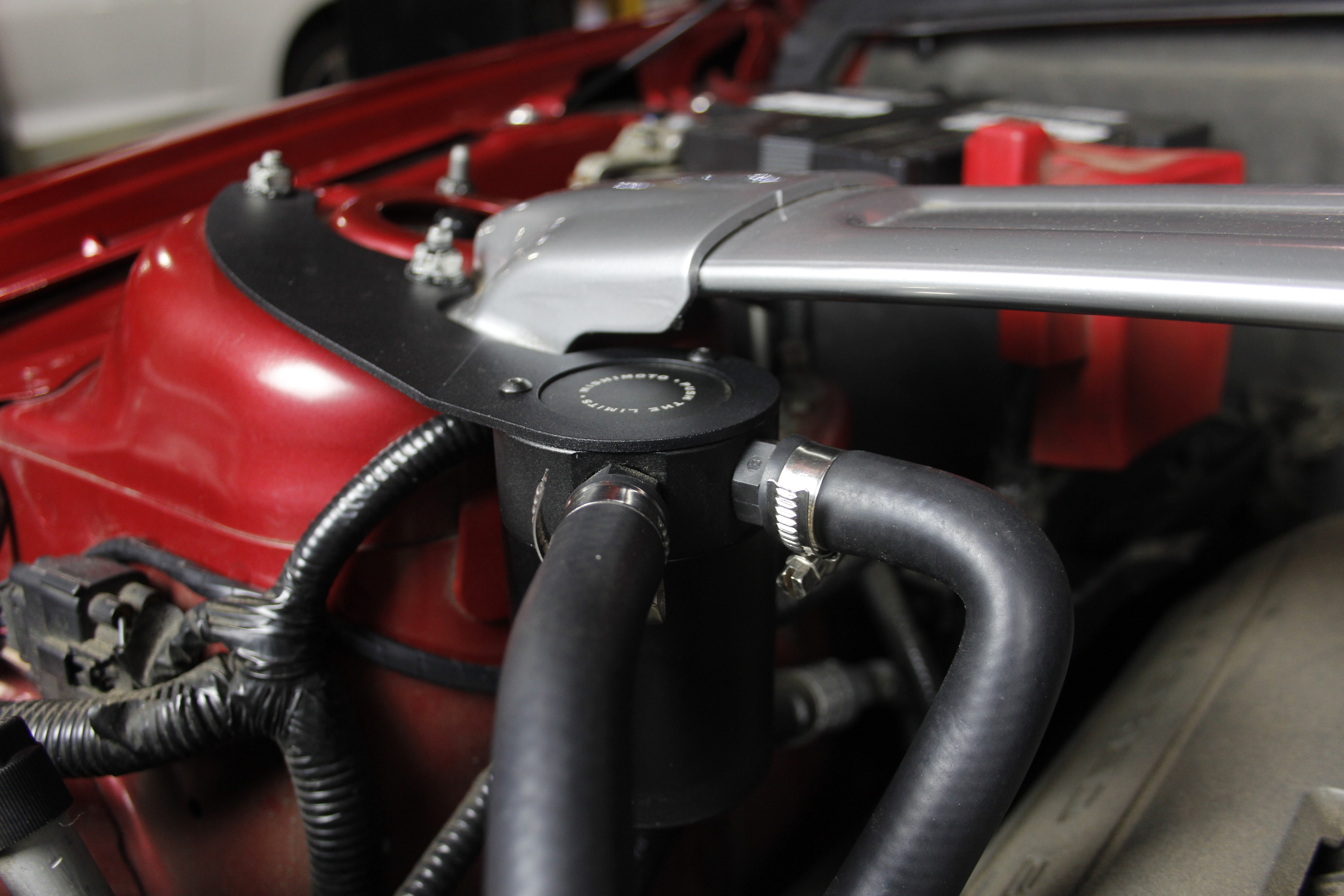
    Side shot of the completed kit
    Side shot of the completed kit

    Our sample production kit arrived at our R&D headquarters and it couldn't have fit any better. Everything was spot on and the installation was easy. You can see in the above image that we've cleaned up the catch can lines with properly routed hoses. The line material is rubber based, retaining a clean, OEM look.

    To keep this kit truly direct-fit, we will also include the quick-disconnect fittings for the PCV connections on the engine.

    Quick-disconnect fittings on our kit
    Quick-disconnect fittings on our kit

    So, it looks nice, but does it work? Well, after the prototype kit had been on the car for about 1000 or so miles, we had this GT come back

    Continue Reading »
  2. Sounds from an American Muscle Car - Exhaust R&D, Part 4: Sound Check

    Sounds from an American Muscle Car - Exhaust R&D, Part 4: Sound Check

    A Gaggle of Pipes,

    Hello everyone! You may remember from our previous 2016 Camaro SS Exhaust post that we have decided to move forward with five different systems for this car. It is my pleasure to let you know that all our Camaro exhaust prototypes have been completed. We've been busy testing and re-testing for fitment, sound, durability, and performance - and fun, of course. Our on-road testing process usually begins a little something like this:

    Rob, the project manager: "Hey Gardiner, I need you to take the SS home tonight to put some miles on the pro system."

    Me: "Ugh, if you insist."

    They really have to twist my arm.

    So many options - which one to choose!
    So many options - which one to choose!

    Exhaust systems are a complex endeavor in any regard, but this dual-mode Camaro exhaust is particularly intricate. This bear has demanded myriad engineering-hours, but we've readily progressed through the trials and tribulations of the R&D process. Now, I would like to show you a particularly cool piece of the system that came to

    Continue Reading »
  3. Gimme Shelter [from high oil temps] - Oil Cooler R&D, Part 2: Testing and Data Analysis

    Gimme Shelter [from high oil temps] - Oil Cooler R&D, Part 2: Testing and Data Analysis

    Interested in purchasing our 2016+ Camaro SS Oil Cooler in silver or black? The discounted Pre-Sale begins NOW!

    Mishimoto's 2016 Camaro SS Oil Cooler Pre-Sale

    As I sit here, isolated from the blistering humidity of a mid-Atlantic summer within the walls of our New Castle, DE office, I can't help but to appreciate the hell out of our A/C and the cooling - *ahem*, heat rejection (gotta keep the engineers happy) - that it provides. Just this past week, certain guests and goings-on have necessitated my spending quite a bit of time outside in the sweltering heat, and this drastic variance in climate really does have an effect on my ability to work well - just don't tell my supervisor!

    Anyway, such temperature deviations have a similar effect on the oil within the LT1 in your 2016+ Camaro SS. Oil that gets too hot will lose its viscosity, which is the very characteristic that makes it thick, slippery, and useful for lubrication inside an engine. As such, it is in your best interest to retain

    Continue Reading »
  4. God Only Knows (how much oil's in your intake) - Catch Can R&D, Part 1: Stock Review

    God Only Knows (how much oil's in your intake) - Catch Can R&D, Part 1: Stock Review

    There's nothing quite like plopping oneself into the car to leave work on a summer evening, beach-bound and brimming, windows down, to the tune of the sunset vibes that arrive hand-in-hand with the heavy midsummer air of July. Our Mishimoto R&D facility is located in New Castle, DE, and around here, people tend to favor numerous seaside towns in Southern New Jersey or in Delaware.

    A true slice of Americana, an evening stroll down the main drag of a typical east coast beach town is sure to leave anyone with a faint smile, humming "Surfin USA" and craving more frozen custard, or maybe another gin and tonic. The competing smells of crisp, briny sea air and sweet, fried funnel cake assuage the senses, while the voices of The Beach Boys emanate lazily and intermittently from the windows of passing cars. That's right west coasters, we have beaches here too, and we also have surfer girls, boardwalks, waves to catch, and even the occasional deuce coupe or fuel-injected stingray.

    steve driving
    Steve behind the
    Continue Reading »
  5. The Mustang GT Intake R&D, Part 1: The Stock System

    The Mustang GT Intake R&D, Part 1: The Stock System

    We've had our Mustang GT for a good while now, and it's time to begin our development of the performance intake. We'll begin by quickly dissecting the stock system and deciding on the direction we'd like to go with our design.

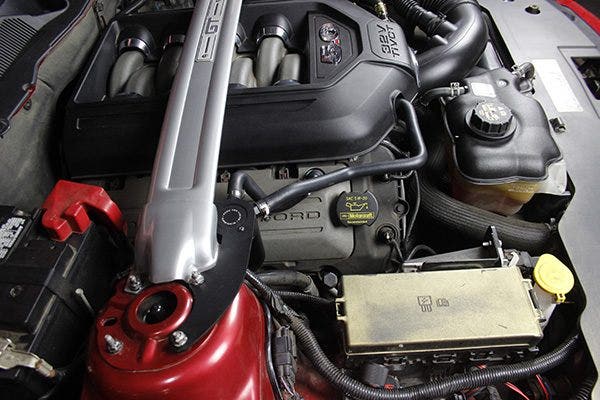
    Stock 2015+ Mustang GT intake
    Stock 2015+ Mustang GT intake

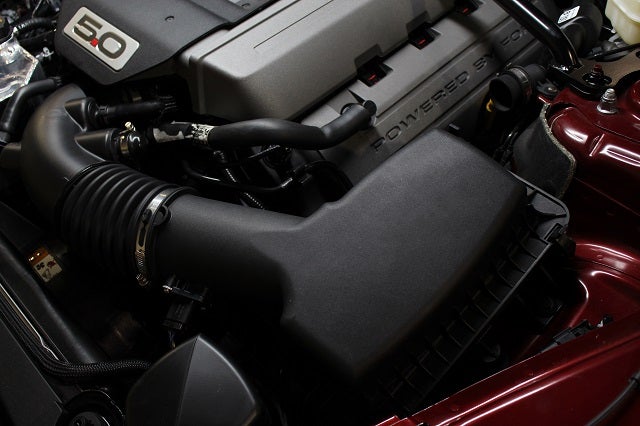
    The stock intake is fairly standard; from the center-mounted throttle body, the intake tube extends toward the driver side of the engine bay and incorporates the curved design that embodies the style of that classic V8 intake.

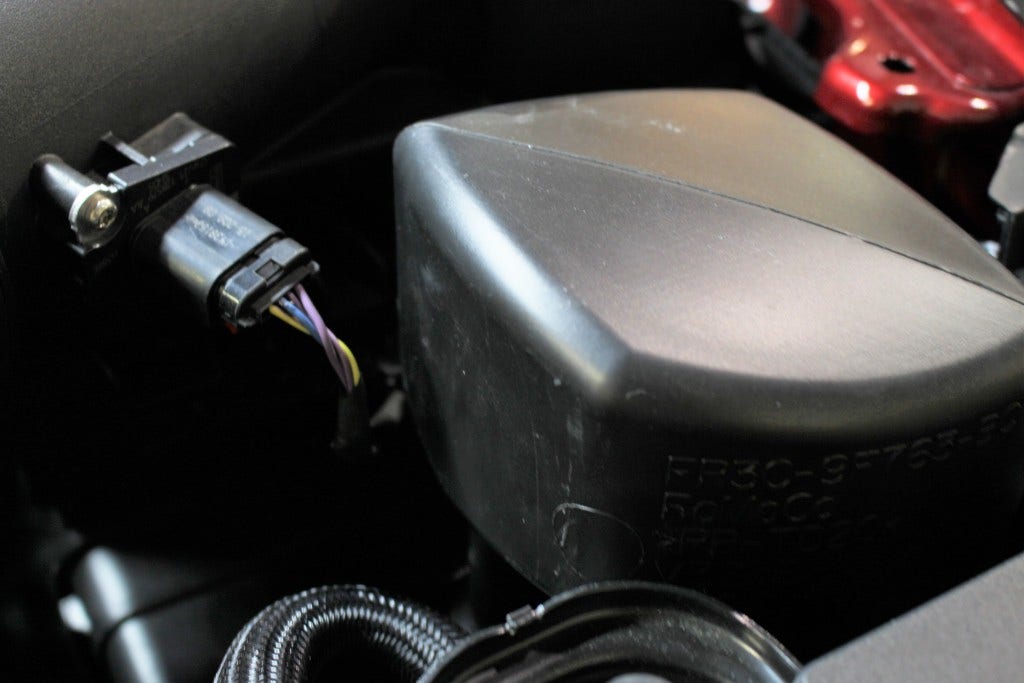
    Stock resonator and mass airflow sensor
    Stock resonator and mass airflow sensor

    Above is an image of the resonator. Most modern cars today have this part as a standard component attached to the intake system. Let's check out some shots of the intake system removed from the car.

    Stock 2015+ Mustang GT intake
    Stock 2015+ Mustang GT intake

    Stock 2015+ Mustang GT intake
    Stock 2015+ Mustang GT intake

    These stock 2015+ Mustang parts must compensate for the length of the front end of this car. Since this system is located some distance from the front end, the intake has a snout that grabs air right from the front grille.

    Continue Reading »
  6. GTO Oil Cooler R&D, Part 4: Temperature and Pressure Testing

    GTO Oil Cooler R&D, Part 4: Temperature and Pressure Testing

    Before completing this project, we need to evaluate the performance benefits of adding this GTO oil cooler. We are confident that our cooler location is receiving ample airflow, so we should see a nice drop in oil temperatures.

    Test Conditions and Apparatus

    We have two different tests to conduct for this particular kit. First, we will record temperature and pressure data to determine the improvement in efficiency.

    To provide accurate data, we need to ensure that our process is repeatable and reduces as many variables as possible.

    Conditions

    • Driving: 65 mph highway cruise
    • Time: 5 minutes
    • Ambient temperature: 68°-75°FNo thermostat installed

    Apparatus

    ·         AEM AQ-1 Data Logging System

    This type of test is not as strenuous as most would anticipate for a performance product. The data we obtain will provide the most accurate comparison of efficiency during steady-state conditions, which should support the addition of an oil cooler. We are also testing without a thermostat in place, which

    Continue Reading »
  7. GTO Oil Cooler R&D, Part 3: Line Route and Thermostat Inclusion

    GTO Oil Cooler R&D, Part 3: Line Route and Thermostat Inclusion

    Any efficient oil cooler setup needs proper regulation if the vehicle is going to see street use. As many know, cold oil can be just as harmful as oil that is overheated. Allowing engine oil to come up to temperature prior to romping on the throttle is a wise move that will extend the life of your GTO LS. Ideally, you would want the oil at operating temperature as soon as the key is turned. This is typically not possible on a first start, but the quicker it arrives at operating temperature the better. This is why we are including a thermostatic option for this kit, and we highly recommend its use in any street car with this kit installed.

    Line Route

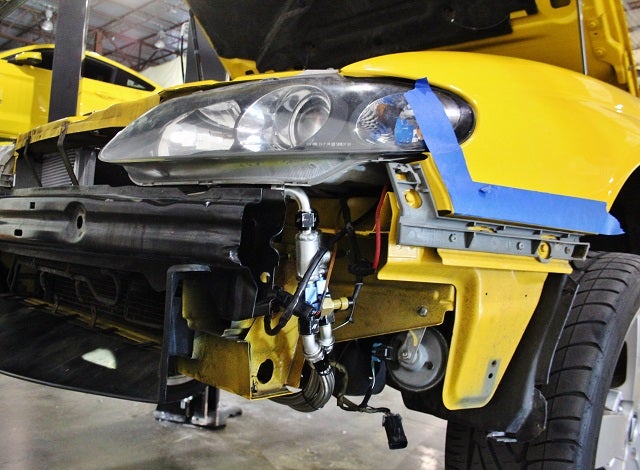
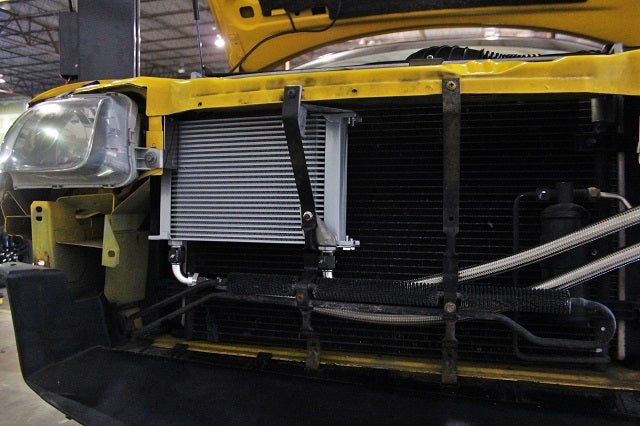
    We found the best route for our oil lines would be to run them across to the driver side of the front bumper area, winding around the radiator support, and eventually mating with our adapter on the oil filter housing. This route provides an ideal line angle coming into the adapter, as well as a good location for our thermostat.

    Mishimoto GTO oil cooler line route
    Mishimoto GTO
    Continue Reading »
  8. GTO Oil Cooler R&D, Part 2: Oil Cooler Bracket Fabrication

    GTO Oil Cooler R&D, Part 2: Oil Cooler Bracket Fabrication

    In our last post, we selected an ideal location to mount our cooler, so now we need to develop and fabricate a set of brackets to rigidly mount our large 25-row heat exchanger. For this task, we have a full fabrication shop and many bright minds at our disposal.

    GTO Oil Cooler Mounting Bracket Fabrication

    We opted to utilize the upper grille ducts shown in our last post, which should provide ample airflow to the heat exchanger. With more airflow hitting the core, we should see impressive heat transfer.

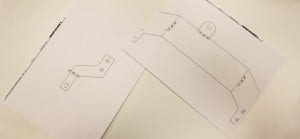
    We began this project by capturing measurements and dimensions from the points where we want to mount within the front grille area. Once complete, we drew up some rough plans for the bracket shape and modeled them in Solidworks. These models were then flattened and printed out in template form.

    Pontiac GTO parts templates
    Pontiac GTO parts templates

    Using our shear, bandsaw, and brake, our initial prototype brackets were quickly completed for test fitting.

    Prototype bracket
    Prototype bracket

    For optimal rigidity, we typically support

    Continue Reading »
  9. Pontiac GTO Oil Cooler R&D, Part 1: Oil Adapter and Initial Development

    Pontiac GTO Oil Cooler R&D, Part 1: Oil Adapter and Initial Development

    We reached out to the forums earlier this month with a request for a GTO owner to lend us his vehicle for product development. The response was substantial. Our inbox quickly filled with messages from enthusiasts willing to help out. We got a similar response last year when we developed an aluminum radiator for the goat. Before jumping into this GTO oil cooler product development, we want to extend a huge thank you to the GTO community for supporting us and for offering recommendations on new projects and product design.

    The Test Subject

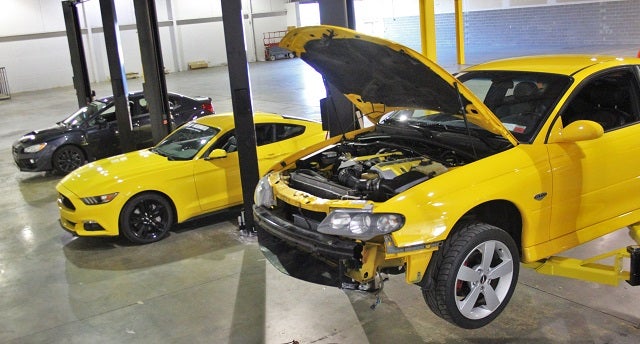
    Our test vehicle came all the way from New York, brought to us by a generous fellow named Tom. This model, a 2004, features a bold Yellow Jacket paint scheme along with a manual transmission. Very nice combination!

    Test vehicle for GTO parts development
    Test vehicle for GTO parts development

    Although the car is in good shape, inside and out, Tom has big plans that include some restoration work. The plate is quite fitting for this vehicle. Definitely a neat touch.

    Test vehicle for GTO parts development
    Test vehicle for GTO parts development
    Continue Reading »