
By Make

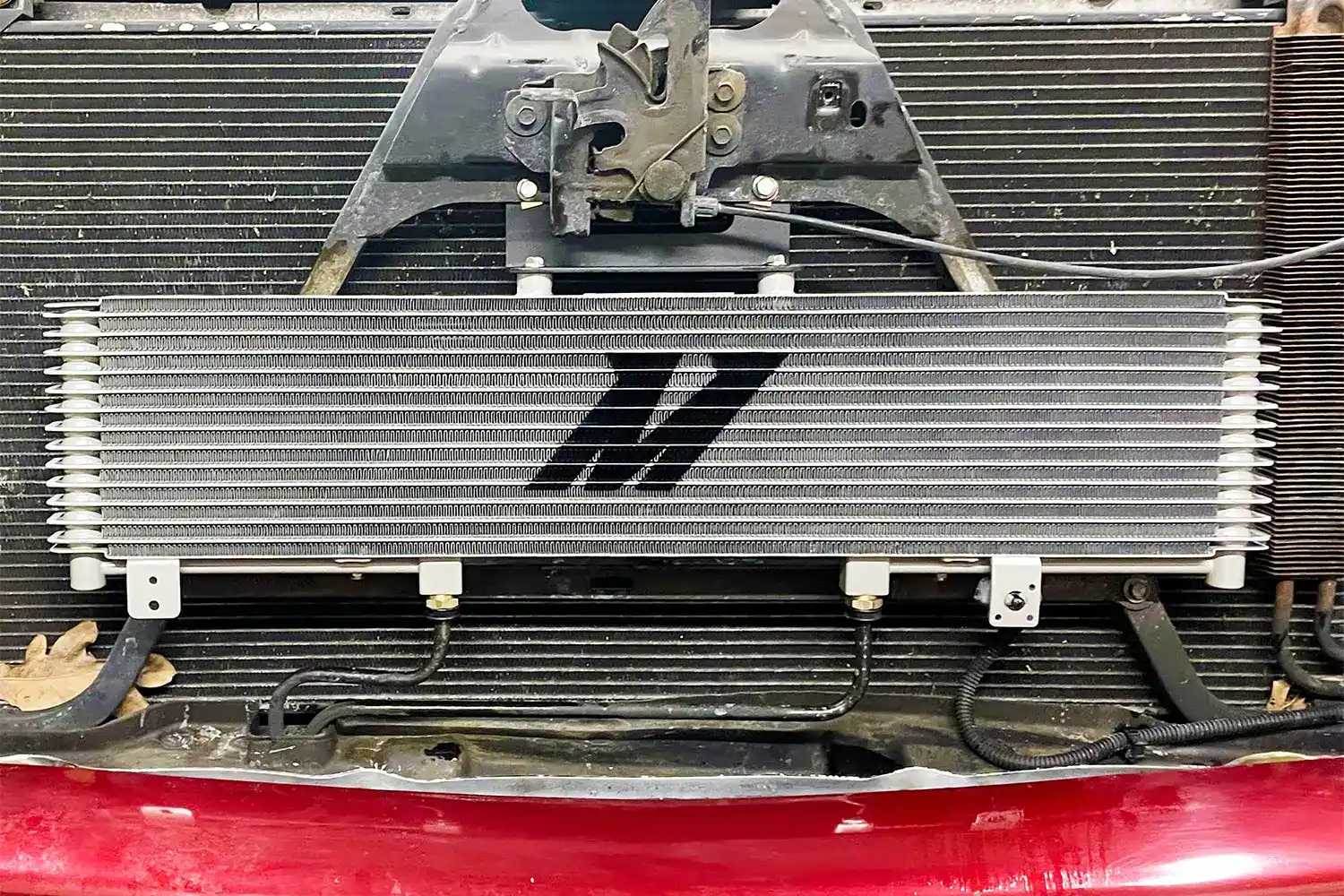
  1. An image of a Ford F250 Super-Duty with the grille removed and a Mishimoto transmission cooler installed in front of the radiator.

    Hard Lines, Hard Work – Transmission Cooler for the 2020-2022 Ford 6.7L Powerstroke

    With 475 horsepower and 1,050 ft-lbs routed through a 10-speed 10R140 TorqShift transmission, the 2020-2022 Ford 6.7L Powerstroke was designed for serious towing. With big power comes lots of heat, and this is especially true when hauling heavy loads or towing uphill. As impressive as this truck is, heat is the enemy of any transmission, and as temperatures rise, so do problems.


    The stock transmission cooler does a decent job of cooling, but if you’re looking to push this truck to the limit, decent won’t do. That’s why we’ve been hard at work developing the Mishimoto Transmission Cooler for the 2020-2022 Ford 6.7L Powerstroke—the first of its kind on the market.

    Stock Evaluation

    The engine bay of a Ford F-250 Super Duty 6.7L Powerstroke with the hood open. Just out of frame there is a blue Ford Mustang to the left and black Ford Mustang GT to the right.

    The stock transmission cooler uses a liquid-to-liquid design. This works by transferring heat from the transmission to the engine coolant. This style of transmission cooler is becoming more commonly equipped by OEMs due to their compact size, but there are pros and cons.

    Typically, liquid-to-liquid transmission

    Continue Reading »
  2. Image of the Mishimoto Performance Transmission Cooler for the 2019+ RAM 6.7L Cummins installed.

    Long Haul – Performance Transmission Cooler for 2019+ RAM 6.7L Cummins

    Picture yourself on the shoulder of the highway. You noticed the gears slipping a few miles back but decided to ignore it because you were only a few miles from home. Those slipping gears turned into violent lurches, and before you knew it, your 2019+ RAM 6.7L Cummins was sporting a Christmas tree dashboard and that dreaded burnt smell. Your transmission is toast.

    But it didn’t have to be this way—if you had the Mishimoto Performance Transmission Cooler, you’d have made it home.

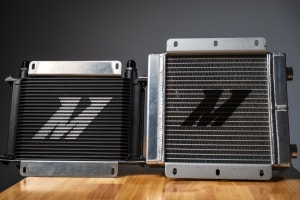
    A side-by-side image comparing the Mishimoto Transmission Cooler and stock.
    FIgure 1. A side-by-side comparison of the Mishimoto Transmission Cooler and stock.

    Our new transmission cooler for the 2019+ RAM 6.7L Cummins is a direct-fit application that offers improved cooling capabilities and seamless integration into your truck’s transmission system. Our cooler’s core is 64% thicker than stock and uses three additional rows of fins for peak efficiency. To maximize the cooling potential of the enlarged core, our engineers decided to use high-efficiency internal fins that add more cooling

    Continue Reading »
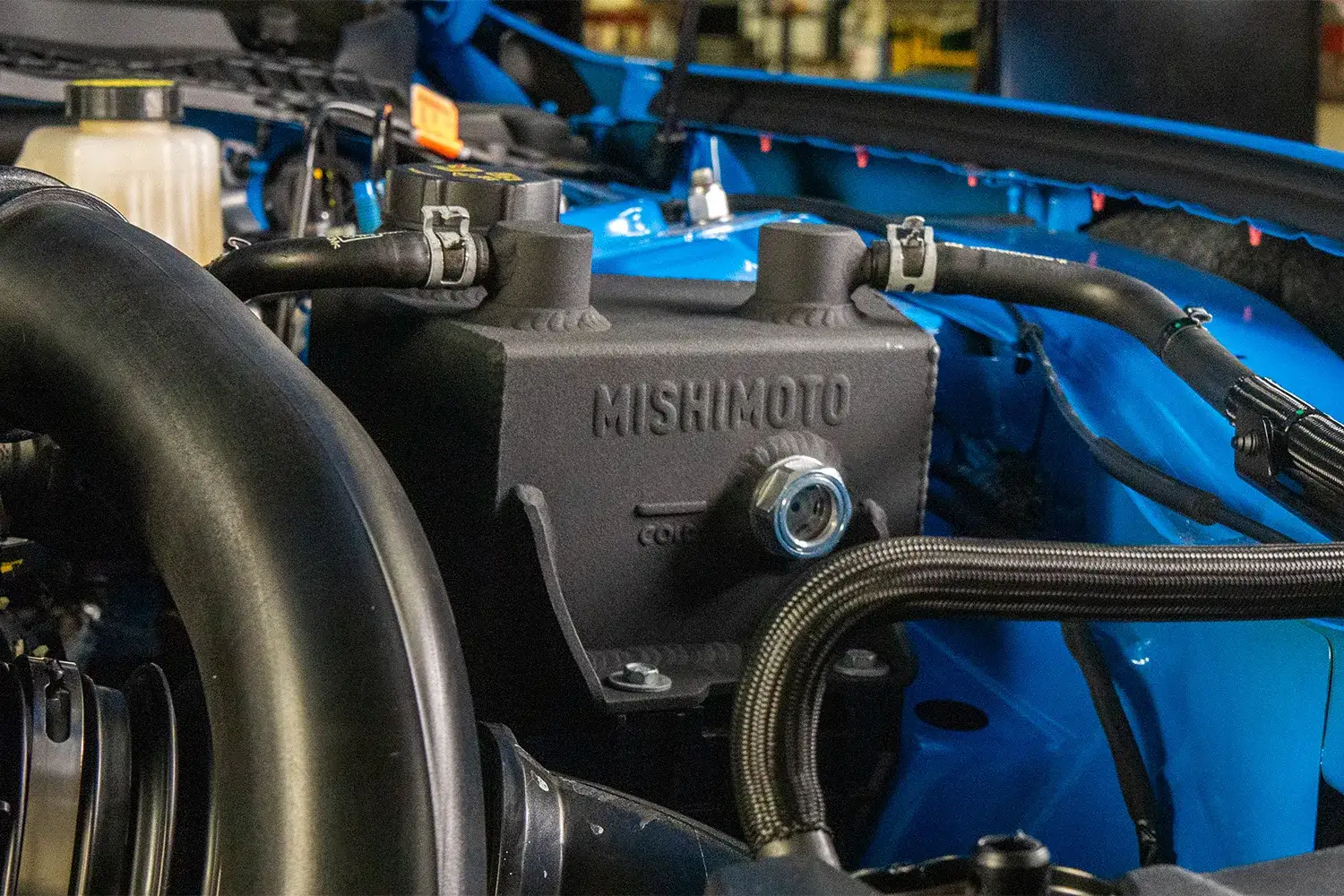
  3. Image of the Mishimoto Aluminum Coolant Expansion Tank installed in the engine bay of a 2024+ Ford Mustang EcoBoost

    Cool & Collected – Aluminum Coolant Expansion Tank for the 2024+ Ford Mustang

    Every owner of a performance vehicle knows the importance of keeping their car running cool, but not everyone knows where to start when it comes to upgrading their cooling system. For owners of the 2024+ Ford Mustang looking to take the next step in performance and reliability for their car’s cooling system, it’s best to start with the basics—the coolant expansion tank.

    The stock coolant expansion tank on the 2024+ Ford Mustang leaves a lot to be desired. The plastic construction isn’t just an eyesore, it’s not designed to stand the test of time. After repeated heat cycles the plastic yellows and becomes brittle, leading to a higher risk of cracking and coolant leakage. This risk only increases when the vehicle is driven hard, such as fast laps at the track or hard pulls on the dragstrip.

    An image of the stock coolant reservoir on the 2024 Ford Mustang.
    Figure 1. The stock coolant reservoir on the 2024 Ford Mustang.

    Thankfully, we have a solution for Mustang owners out there.

    The direct-fit Mishimoto Coolant Expansion Tank for the 2024+ Ford Mustang features

    Continue Reading »
  4. An image of the Mishimoto Performance Transmission Cooler for the 1999-2013 Chevy Silverado and GMC Sierra.

    The Heat is On – Performance Transmission Cooler for 1999-2013 Chevy Silverado & GMC Sierra

    For truck owners who depend on their vehicle for work, reliability and performance are paramount. Whether your truck is a construction fleet vehicle or a dedicated tow rig, one of its greatest enemies is heat — especially when it comes to the transmission.

    Transmissions can generate a lot of heat, especially when towing, driving in rough conditions, and off-roading. This becomes more of a problem when they’re paired to a powerful engine, such as those used in GMT800 and GMT900 trucks, which is why we’ve been hard at work developing our Performance Transmission Cooler for the 1999-2013 Chevy Silverado and GMC Sierra.

    The Mishimoto Performance Transmission Cooler for the 1999-2013 Chevrolet Silverado and GMC Sierra.
    Figure 1. The Mishimoto Performance Transmission Cooler for the 1999-2013 Chevrolet Silverado and GMC Sierra.

    Using the same tried-and-true core design as our K2 and Duramax trans coolers, our transmission cooler for the 1993-2013 Chevy Silverado and GMC Sierra boasts a 521% increase in core volume and 278% increase in frontal area compared to stock. The stacked-plate core

    Continue Reading »
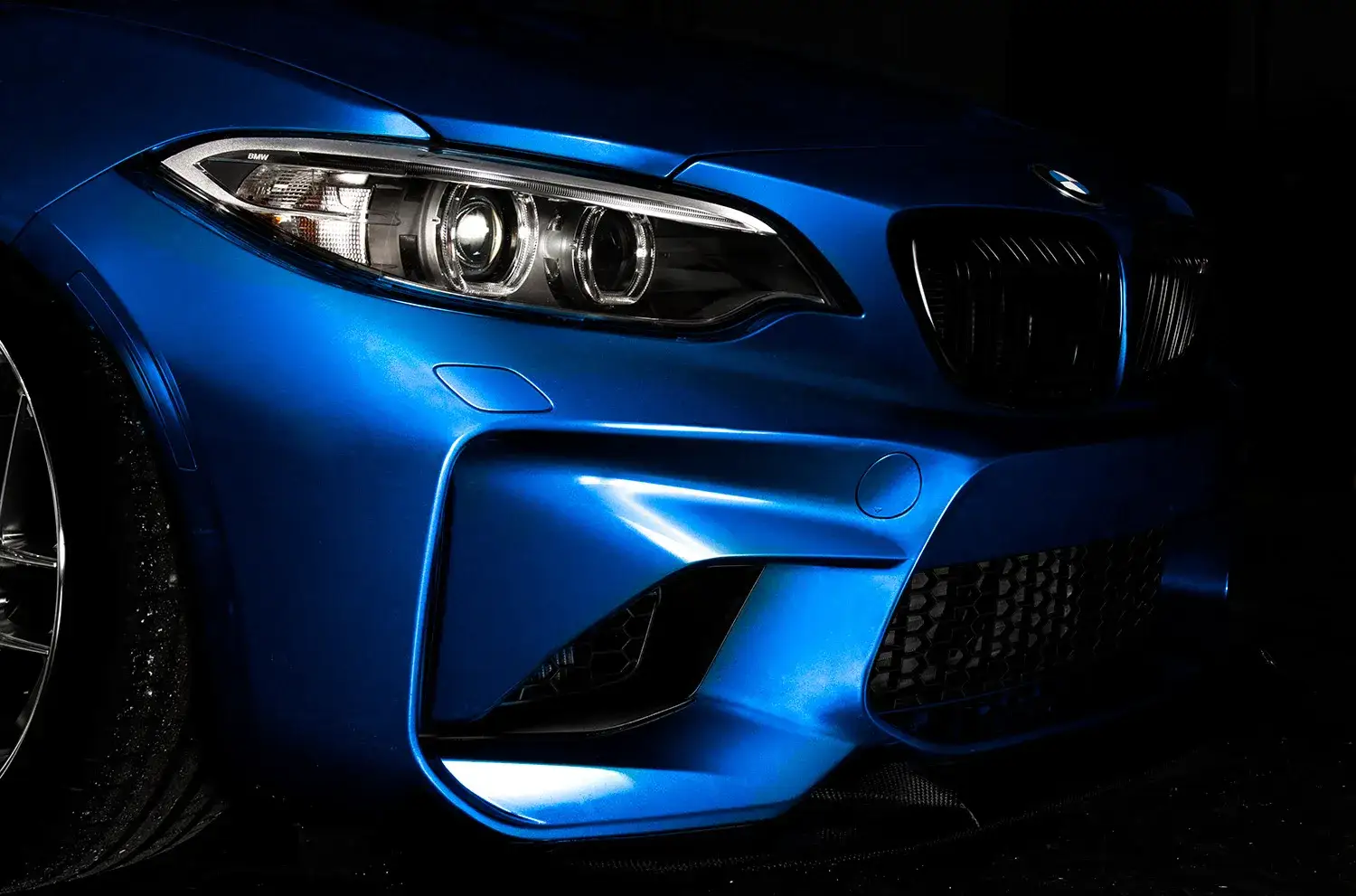
  5. A close-up image of a 2017 BMW M2's grille.

    Charge Forth – Performance Charge Pipes for BMW N54 and N55 Engines

    In 2006, BMW introduced a new mass-produced turbocharged engine for the first time in twenty years—the N54. Three years later, they released the N55 as a successor to the N54, which offered fuel efficiency and reliability improvements over its predecessor. While the two engines have their differences, at their core they’re both three-liter, turbocharged straight-six engines, both put out over 300 horsepower, and both were used for as the powerplant for numerous BMW models. But they have something else in common—a weak point.

    An image of a blue 2017 BMW M2.
    Fig 1. A 2017 BMW M2 in our garage for test fitment.

    Stock Evaluation

    Hop onto any BMW forum and search for either engine with the words “charge pipe”. It won’t be long before you find post after post about the charge pipes on these engines cracking and failing, even on stock tunes. The OEM charge pipes used on the N54 and N55 engines are plastic, which becomes brittle and weak after time and repeated heat cycles. Once the charge pipe cracks, the engine begins drawing

    Continue Reading »
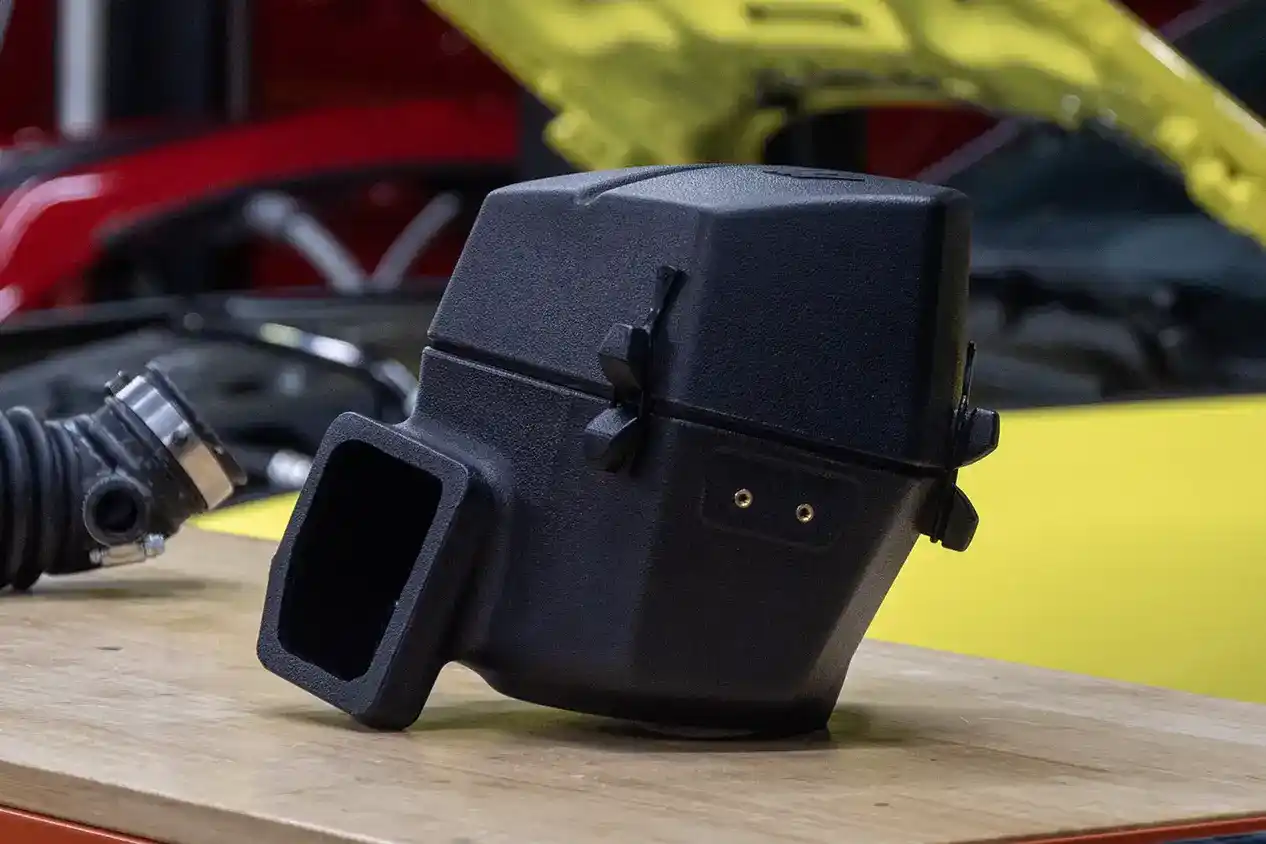
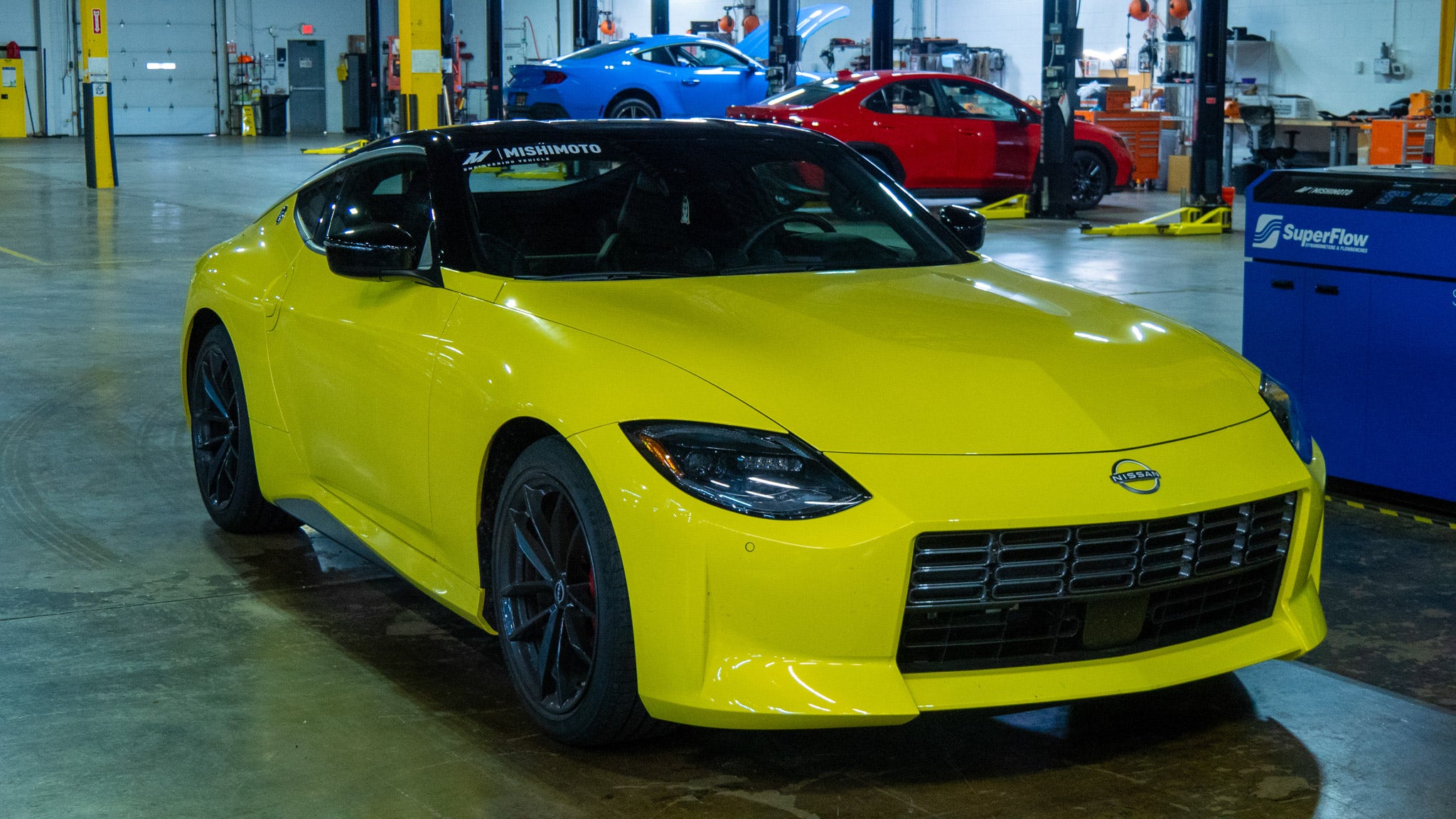
  6. Mishimoto Performance Air Intake for the 2023+ Nissan Z

    Dual Drive – Performance Intake for the 2023+ Nissan Z

    When Nissan planted the powerful VR30DDTT 3L V6 engine with twin turbochargers in the Nissan Z, there wasn’t much room left in the engine bay. The cramped area didn’t allow enough space to accommodate the traditional top-and-bottom-split airbox design, so they created a unique single-piece airbox with vertically inserted panel filters that maximized flow while minimizing size.

    As enthusiasts and engineers, we tipped our hats to appreciate the work Nissan did with this design. But we couldn’t help but ask ourselves—how can we make it even better?

    Design Process

    Our engineer, Ye, set out to design a direct-fit airbox for the 2023+ Nissan Z with these goals:

    • Achieve better airflow than stock
    • Ensure a direct-fit, bolt-on installation
    • Create a design that lets the user alternate between a sealed or open airbox setup
    • Deliver a high-quality intake tone
    • Maintain a safe air-to-fuel ratio and ability to run on a stock tune

    She began by inspecting and removing the stock airboxes to determine

    Continue Reading »
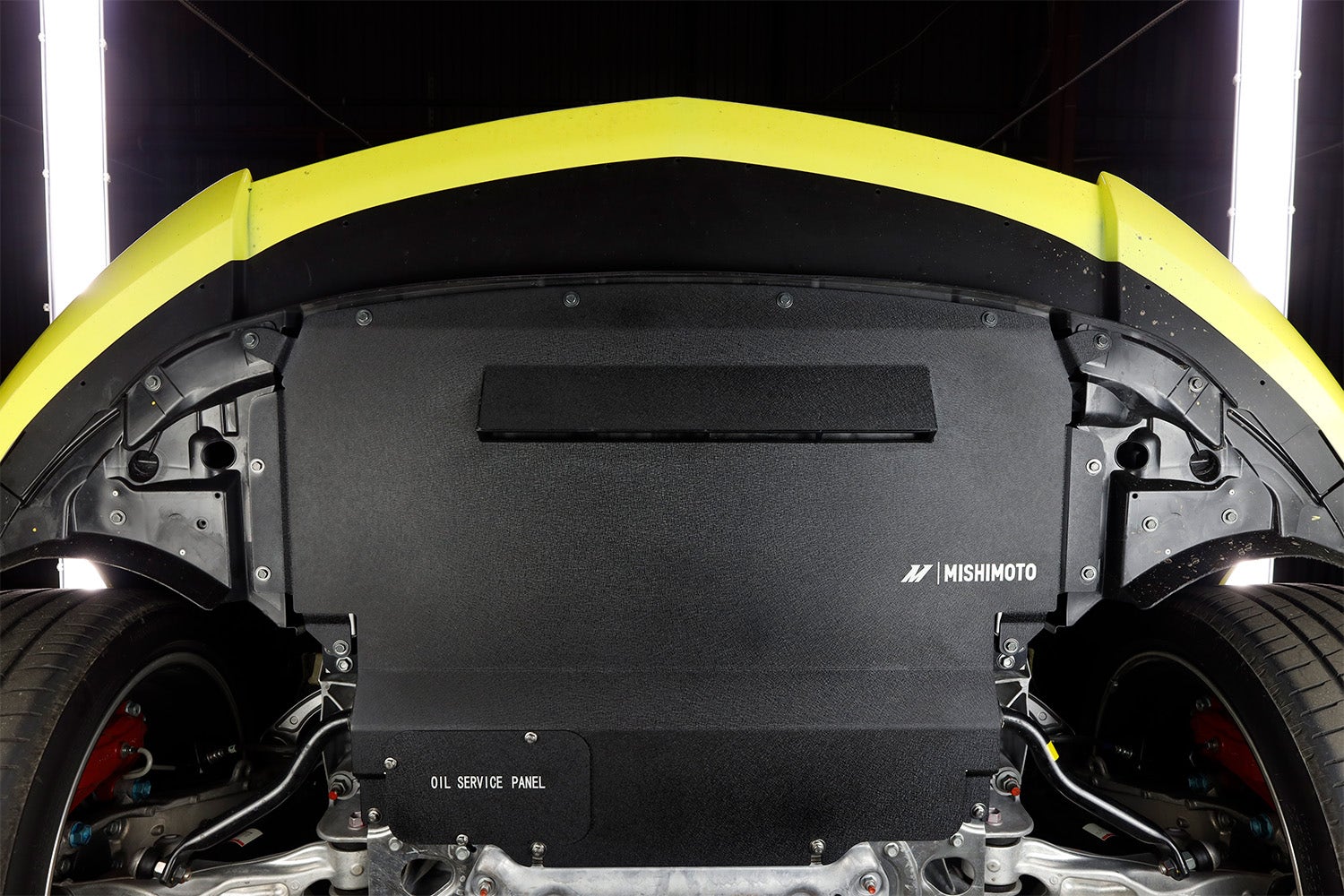
  7. Armor Up – Engine Skid Plate for the 2023+ Nissan Z

    Armor Up – Engine Skid Plate for the 2023+ Nissan Z

    When it hit the market in late 2022, the new Nissan Z turned heads. Released as a replacement for the Nissan 370Z, the 2023 Z featured a fresh, sleek new design with a 400 horsepower engine that could do 0-60mph in 4.3 seconds. The only problem? Due to international chip shortages and production bottlenecks, they were almost impossible to find.

    Buyers who got their hands on a new Nissan Z count themselves among a lucky few. While the Z is a vehicle meant to be driven fast and hard, it’s understandable that owners might be hesitant to risk damaging a car that they worked so hard to get—especially since the new Nissan Z comes with a plastic oil pan.

    To lessen these concerns, we set out to develop a layer of protection that would give Z owners the confidence to drive aggressively. The result of these efforts is the new direct-fit Engine Skid Plate for the 2023+ Nissan Z.

    Figure 1. A rendering of our skid plate.

    From the factory, the Nissan Z doesn't come with an engine skid plate, also known

    Continue Reading »
  8. Road Test Results – Baffled Oil Catch Can for 2024+ Mustang V8

    Road Test Results – Baffled Oil Catch Can for 2024+ Mustang V8

    We’re entering the fourteenth year of production for Ford’s 5.0L Coyote V8 engine, and in that time the Coyote has made a name for itself. It’s a powerful, throaty engine that’s been in the Mustang GT since the 2011 model year. Since its inception, the folks at Ford have managed to squeeze an extra 68 horsepower out of the Coyote with the new 2024 Mustang GT boasting 480 horsepower. Despite these gains, one issue the Coyote has had for years still persists—excessive blow-by.

    What is Blow-by?

    If you’re not familiar, blow-by is a result of high pressure on the top side of the piston pushing combustion gasses, as well as droplets of oil and fuel, past the piston rings and into the crankcase. To prevent excessive pressure in the crankcase, most modern vehicles extract blow-by via the PCV system and route it back into the intake. While most manufacturers add an air-oil separator to the PCV system, they often aren't as effective at removing oil as we might like. This leads to the problem of oil

    Continue Reading »
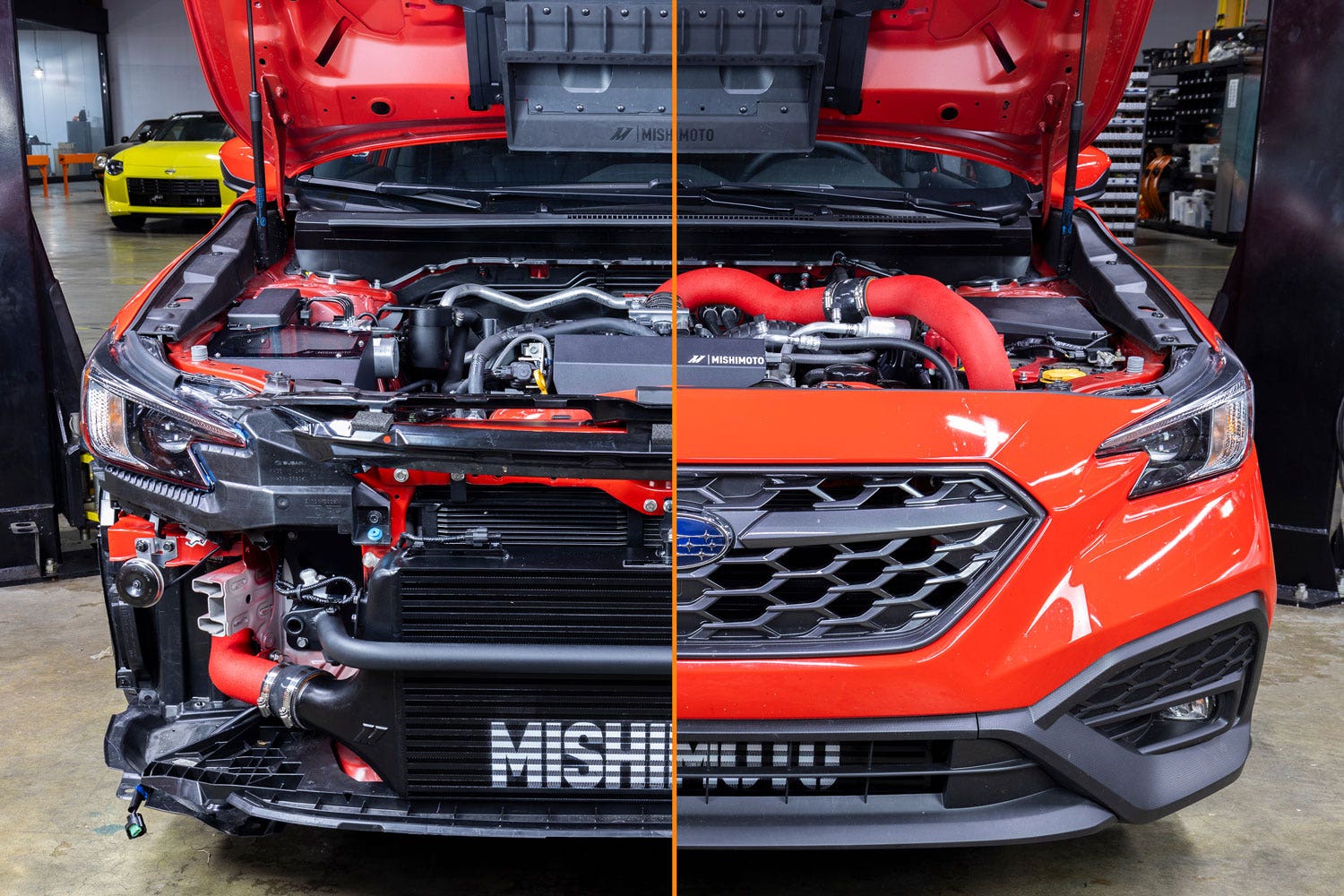
  9. Stay Frosty – Performance Front-Mount Intercooler Kit for the 2022+ Subaru WRX

    Stay Frosty – Performance Front-Mount Intercooler Kit for the 2022+ Subaru WRX

    One of the most common modifications for WRX owners, particularly those who plan to tune for performance, is upgrading to a performance intercooler. Here at Mishimoto, we’ve been making performance intercoolers for the WRX for quite a while. Since we’ve covered the last few generations and already made a top-mount intercooler for the current fifth generation, we figured the next logical step was to produce a front-mounted version for the 2022+ WRX.

    Let’s take a look at what our engineers had in mind when they got to the drawing board.

    Design Overview

      • Create an intercooler that performs better than the stock intercooler
      • Minimize the pressure drop normally associated with a front-mount intercooler kit
      • Include replacement bumper bar with a location for the factory tow hook
      • Direct fit kit with minimal trimming required
      • Allow for fitment of aftermarket front strut bars

    Stock Evaluation

    The first step to designing a performance product that aims to outperform its stock

    Continue Reading »
  10. Performance Radiator for the 2023+ Nissan Z

    Performance Radiator for the 2023+ Nissan Z

    We’ve been hard at work to develop our line of products for the Nissan Z, and we’re proud to release our latest addition to the line-up—the Mishimoto Performance Radiator for the 2023+ Nissan Z.

    While performance is always a goal for our engineers, they know that durability is just as important. The stock radiator for the Nissan Z uses plastic end tanks, which are prone to leaking and can crack in extreme temperatures or during aggressive driving. That’s why we’ve designed our radiator with an all-aluminum construction to prevent cracks and leaks. We’ve implemented a strutted tube design, which offers increased rigidity that’s able to absorb more stress and flex without breaking or leaking, the ability to handle higher pressures, and a 20% increase in leading edge thickness – the area where most radiator tubes fail. Our radiator is also designed to retain the stock stone guard, keeping pesky gravel and debris from damaging the fins.

    The direct-fit design of our radiator ensures a straightforward

    Continue Reading »