Monthly Archives: July 2016

  1. Upgrading Induction - Induction Hose R&D, Part 2: From Concept to Reality

    Upgrading Induction - Induction Hose R&D, Part 2: From Concept to Reality

    We are now one step closer to completing this induction project! The bulk of our testing is just about finished and we have gotten some awesome results. One of our biggest objectives was to increase the internal volume over the stock intake. With more air surging through the hose, the potential for improved power output is increased as well.
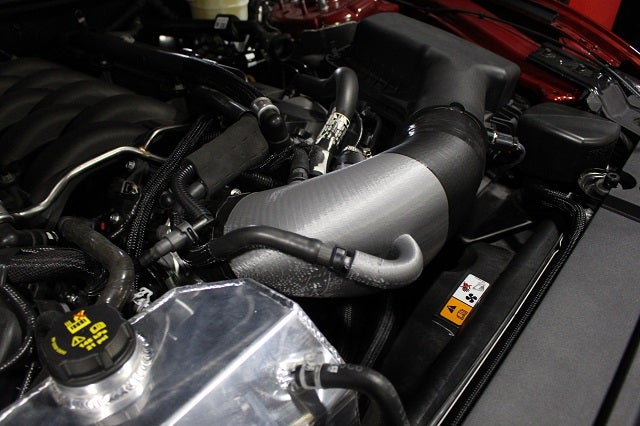
    Prototype 3D printed 2015+ Mustang parts
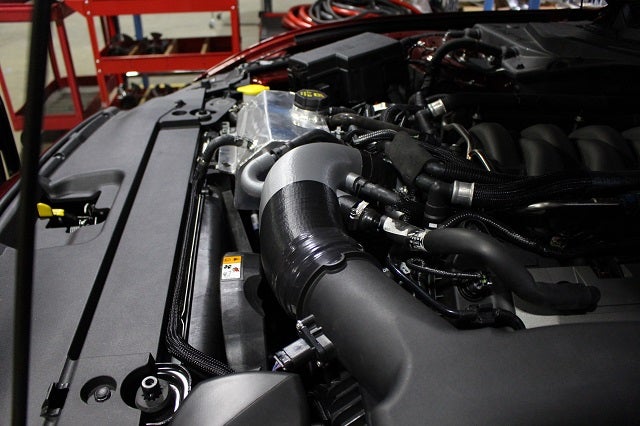
    Prototype 3D printed 2015+ Mustang parts

    The sound imposer is blocked off here, but it will be deleted!
    The sound imposer is blocked off here, but it will be deleted!
    In our previous post, we said we would include all four ports and attachments. However, we decided on a complete omission of the sound imposer port. You will see what that looks like later on in this post. The 3D printed part you see above does have the port, but it is blocked off, simulating how the final design will perform on the dyno. Speaking of which, let's look at our dyno runs!

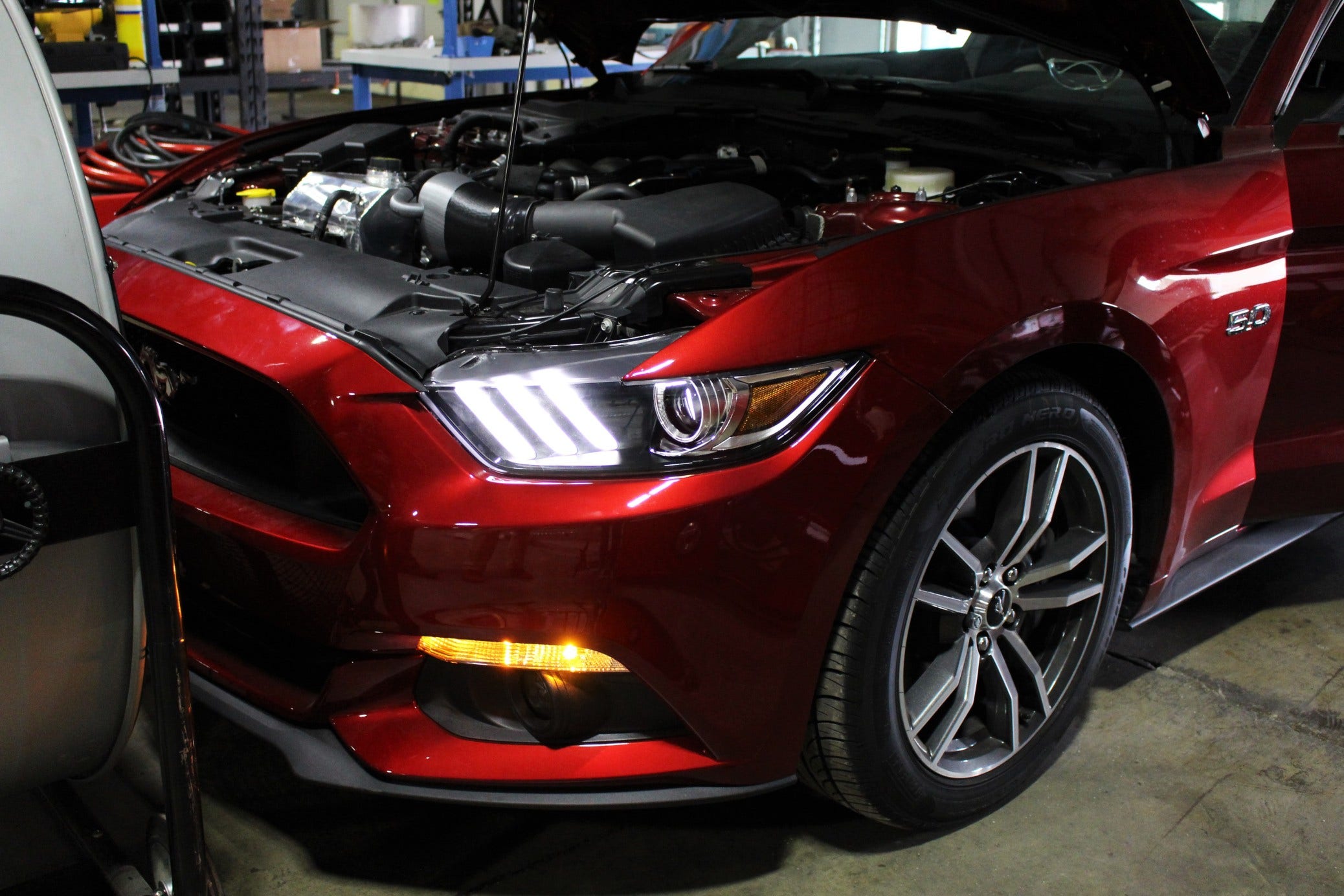
    2015 Mustang GT parts testing
    2015 Mustang GT parts testing

    The stock intake tube begins at 95mm from the top of the airbox, which then leads into the accordion section that necks down to 87.5mm.

    Continue Reading »
  2. Even F-150'n Cooler - Intercooler R&D, Part 2: 3D Models

    Even F-150'n Cooler - Intercooler R&D, Part 2: 3D Models

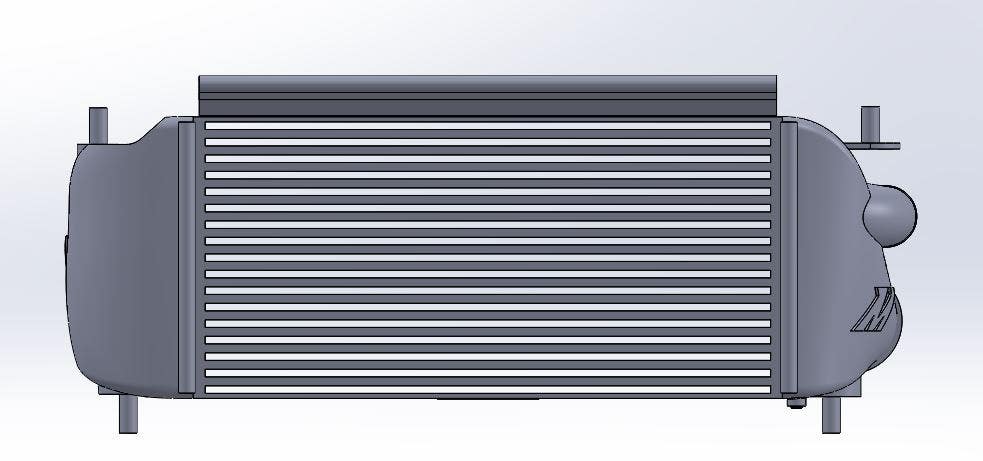
    Howdy folks, and welcome to the second installment of Mishimoto's Engineering Blog on the development of our upcoming 2015+ F-150 EcoBoost intercooler. In our first post, we examined the factory intercooler on this truck and took a look at some of its unique features, but since then, we have made a ton of headway on developing our improved version. To learn more about how the system functions, check out that first F-150 EcoBoost intercooler post.

    When we first began on this project, we were choosing between a couple of possible design philosophies that Jason, the project engineer, had conceived.  Each had its benefits and drawbacks, but rather than trying to read minds, we decided to reach out to all of you to find out what you wanted for the ideal F-150 EcoBoost intercooler.

    You may recall that this truck uses a series of active electronically controlled shutters to modify the aerodynamic profile of the vehicle's front end in order to help with gas mileage. The shutters sit not only

    Continue Reading »
  3. The Fan Shroud Strikes Back - Fan Shroud Pre-Sale, Part 2: Installed Shots

    The Fan Shroud Strikes Back - Fan Shroud Pre-Sale, Part 2: Installed Shots

    Interested in Purchasing our BRZ/FR-S Fan Shroud Kit in Black? Our discounted Pre-Sale is already underway!

    Mishimoto BRZ Fan Shroud Pre-sale

    Greetings, padawans. I'm here again with a sequel to our first post on the black BRZ fan shroud. This will be a quick one, I promise, but I wanted to update you all with the latest on this cool looking piece.

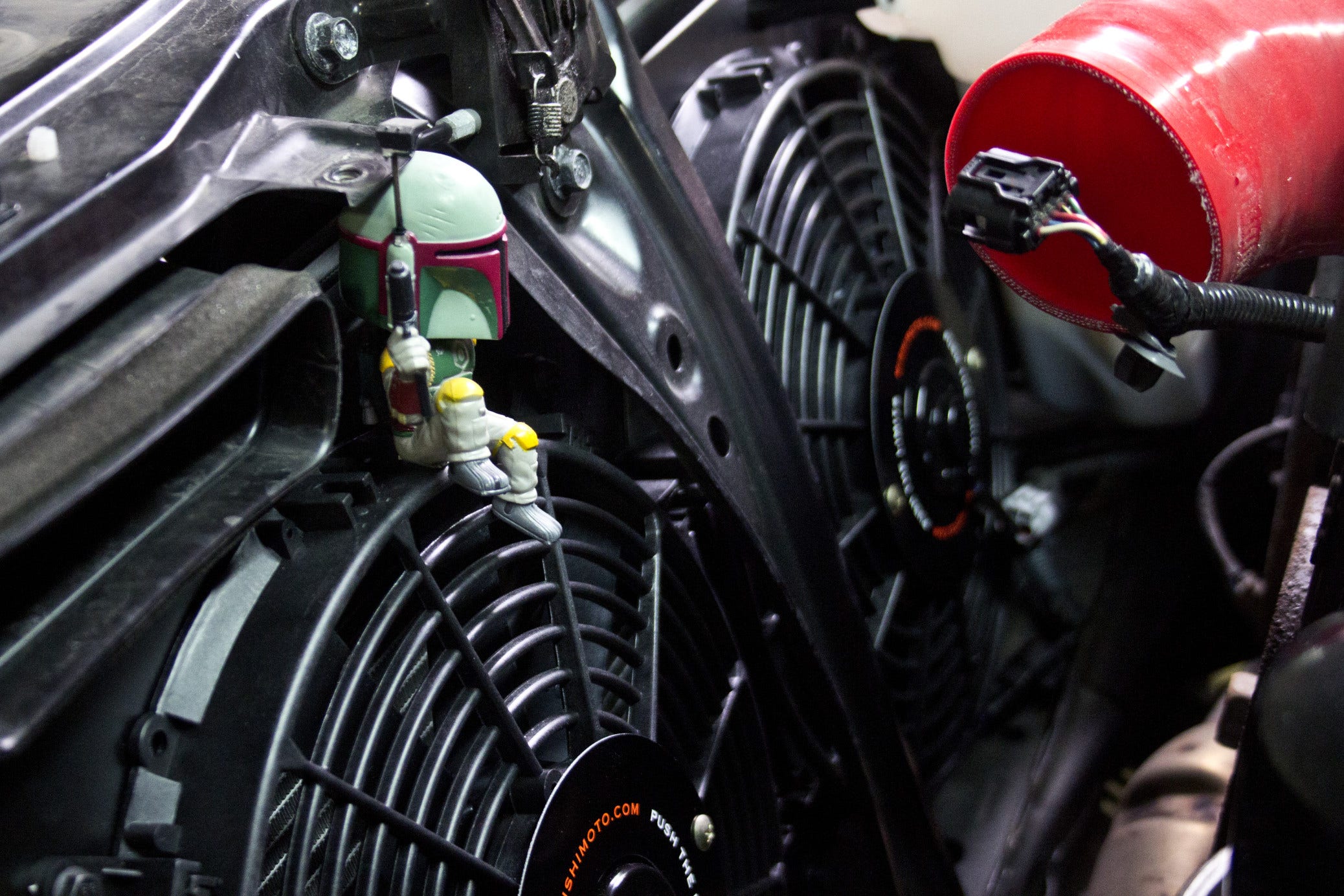
    Share with you, I must, some photos of the Mishimoto BRZ fan shroud in black. Jason the Engineer, a proud Toyobaru owner himself, was nice enough to loan us his vehicle so that we could install this shroud and bring his car to the better side of the force.  Once we got the tractor beam warmed up, we pulled the car into our R&D center to enshroud it in the color of the Sith.

    Jason, dropping the black Mishimoto BRZ fan shroud into his FR-S
    Jason, dropping the black Mishimoto BRZ fan shroud into his FR-S

    Non-nerd English translation: We installed our new anodized black BRZ fan shroud on a BRZ, and I've got pictures.

    Some Photos"

    The install is a breeze; the Mishimoto BRZ fan shroud snaps easily into place.
    The install is a breeze; the Mishimoto BRZ fan shroud snaps easily into place.
    Continue Reading »
  4. The Cutting Edge of Mishimoto - WARDJet Water Jet Cutter

    The Cutting Edge of Mishimoto - WARDJet Water Jet Cutter

    A Sharper Knife

    When early man wanted?to cut something, he beat two rocks together until one of them was vaguely pointy and sharp. I imagine there were probably a lot of smashed thumbs and whatever the equivalent of cursing was to a caveman.? Over thousands of years, humans developed new ways of cutting materials (and themselves). The Egyptians created copper saws, early Europeans learned how to harden iron, and the advent of steel led to stronger, more efficient saws.? Then, in the 1880s, George Clemson perfected the hacksaw, and bike thieves all over the world rejoiced.

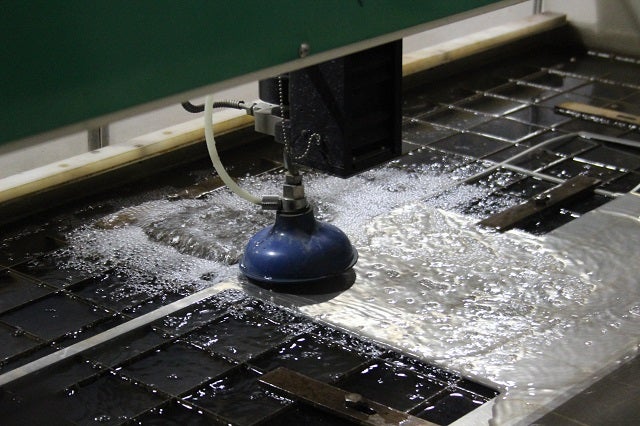
    The waterjet, jetting away
    Water jet cutters have revolutionized the way we cut almost every material

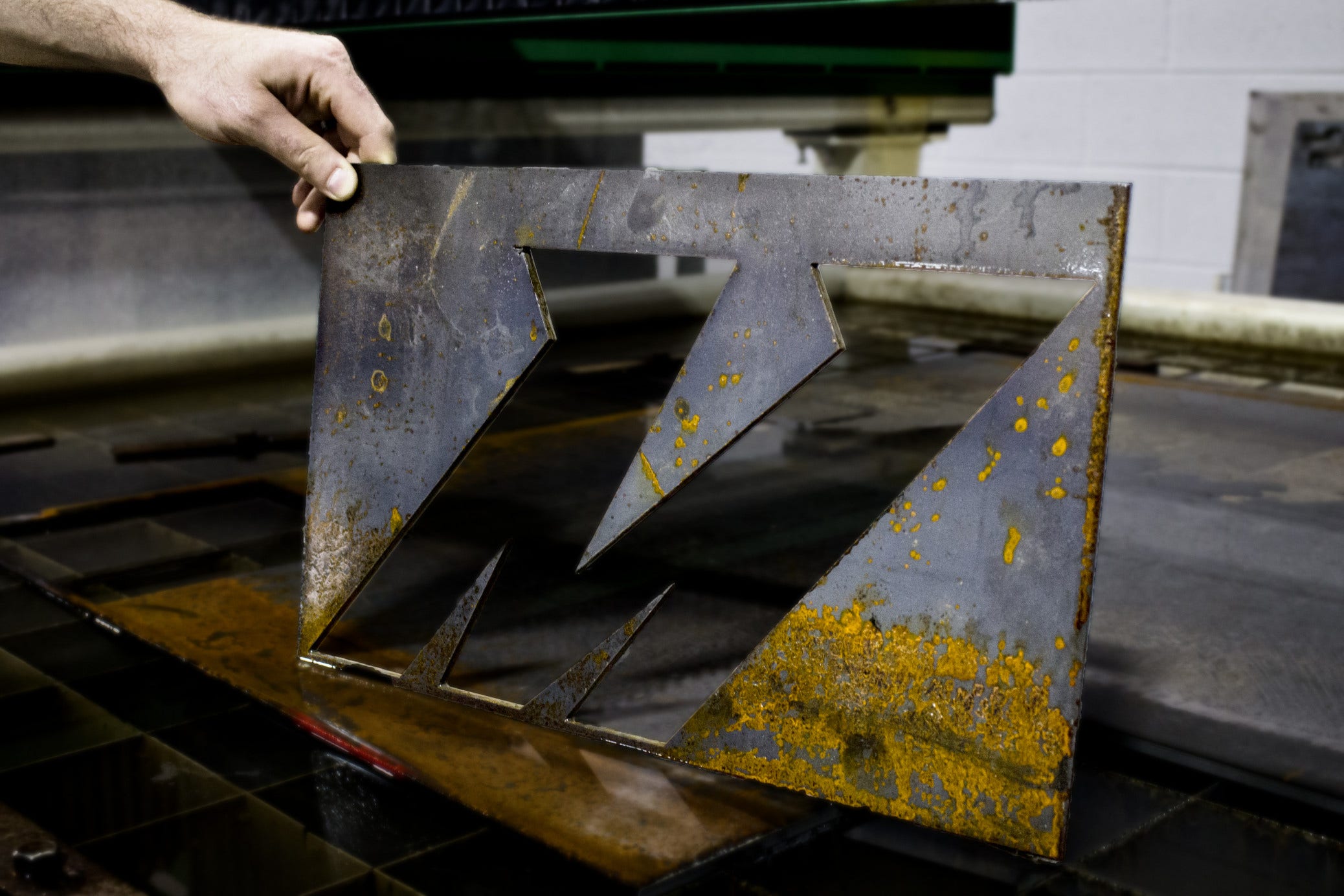
    Fast forward to the 21st century, where we use water and crushed rocks to cut steel up to 6 inches thick.? Welcome to the world of the water jet cutter.? Water jet cutters use a jet of water (who would have guessed?) mixed with crushed garnet, and pressurized up to 60,000 psi to slice and dice through just about anything you put in front of it,

    Continue Reading »
  5. Love Is in the [Charge] Air - Secondary Radiator R&D, Part 2: Prototype Testing and Data

    Love Is in the [Charge] Air - Secondary Radiator R&D, Part 2: Prototype Testing and Data

    Last time, we took a look at the unique design of the Ford 6.7 secondary Super Duty radiator and its accompanying thermostats. Our last post was only about two weeks ago, but I come bearing some good news - plus, great things come in twos.

    Why does my primary rad need a companion?

    As a recap, this heat exchanger, found in 2011+ Ford Super Duty trucks, works as an integral part of a mostly independent secondary cooling system that manages many of the truck's auxiliary cooling needs, including those of the liquid-to-liquid charge air cooler. Cooling these engine components more efficiently should not only prolong their useful lives, but also may make for some nice performance benefits if coupled with a tune - who doesn't love colder charge air?

    The secondary system allows the primary radiator to more exclusively and efficiently cool the torquey Power Stroke motors found in these trucks. For more information on the intricacies of this complex, clever system (and the benefits of upgrading it),

    Continue Reading »
  6. ReSpiration Focal Point - Intake R&D, Part 2: Something's Rustling Up

    ReSpiration Focal Point - Intake R&D, Part 2: Something's Rustling Up

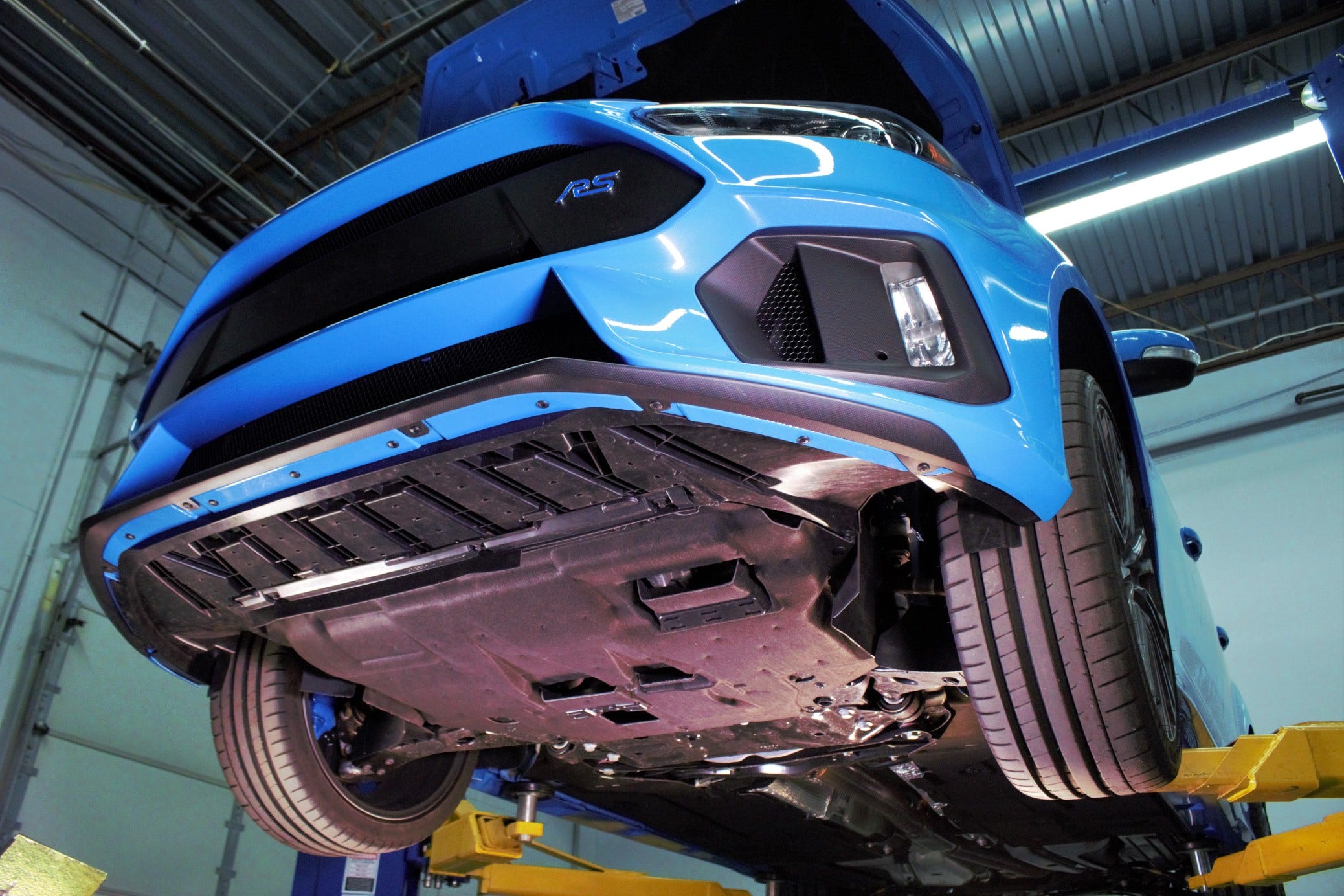
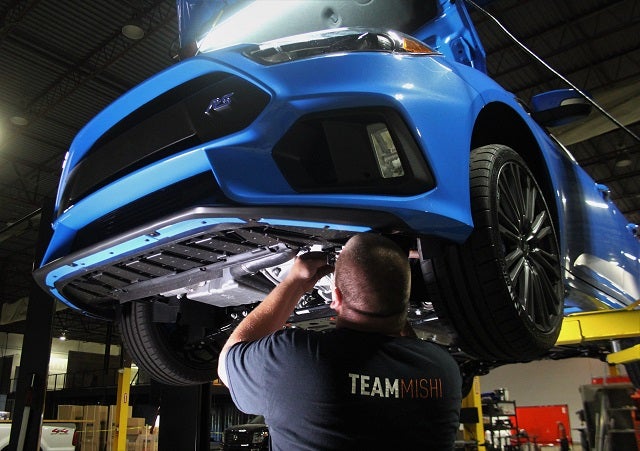
    The RS has gotten a lot of attention the past few weeks, especially with the ball in our court. Need I remind you of our awesome stock dyno clip?

    But somethin's-a-brewin with one of our most recent projects, the performance intake we are developing for this hot hatch. We mentioned earlier that the development of this intake kit is not completely uncharted territory, considering that we made one for the 2013-2014 Focus ST. However, as we dived further into this project, we uncovered the true complexities of this design compared with our ST intake kit.

    Intake Construction

    What exactly makes this intake pipe so much more complex? It's simple: More attachments and brackets need to be added so that the fit will be accurate. Not only have the number of these attachments increased, but also the orientation of these pieces are not easy to accommodate. There will be bends with relatively tight tolerances, and these measurements must be exact. Difficult? Yes. Impossible? Not at all!

    First, we needed

    Continue Reading »
  7. Removing the Rubber - Silicone Induction Hose R&D, Part 1: Stock Review and 3D Models

    Removing the Rubber - Silicone Induction Hose R&D, Part 1: Stock Review and 3D Models

    Setting the Scene"

    The early summer sun hangs low and cool against the rolling American meadows, lazily beginning to cast its gaze over another serene, newborn morning. Delicate but unwavering, it brings the landscape to life, painting the valley in amber shades so warm they can practically be felt. The depth and flowing continuity in these endless fields, draped in their clementine pallet, remains mostly unbroken but for a neat, dark ribbon of tarmac, slicing back and forth as if laid down by the hawk gliding soundlessly above.

    Like an incoming storm, an imposing, thunderous tone bellows distantly above the hills, cutting through the picturesque still-life and growing louder as it echoes, following the zig-zagging vein of asphalt, ever-aggressively surging forward and inhaling the scene's serenity only to expel it rearward in an affront to all things understated. Contrasting though it may seem, the proprietor of this sound is just as quintessentially American as the gentle landscape through

    Continue Reading »
  8. Gotta Keep Em' Separated- Catch Can R&D, Part 3: Test Results

    Gotta Keep Em' Separated- Catch Can R&D, Part 3: Test Results

    Testing is complete! Although we would still like to be cruising through twisty back roads logging R&D miles, it is time to bring the Focus RS back to the stables to examine our catch can. When we test our catch cans, we try to put a wide variety of miles on the car to best replicate normal driving situations. We send one of our engineers out into the wild to put our development vehicle through its paces and ensure our products are functioning as designed.

    Focus RS catch can testing
    Focus RS catch can testing

    Blow-by Meets it's Match

    Although our compact baffled oil catch can has been tried and tested numerous times, we still want to put it through the ringer to ensure that it functions just as nicely on every application. Just like our previous catch can kits, our compact baffled oil catch can has proven itself once again and our testing went off without a hitch. Upon initial investigation we noticed oil buildup in the hose leading to the catch can, on the internals of the catch can, and pooled in the bottom

    Continue Reading »
  9. Building Your Passion: Jeep Wrangler Camouflage and Matte Olive-Drab Silicone Radiator Hoses

    Building Your Passion: Jeep Wrangler Camouflage and Matte Olive-Drab Silicone Radiator Hoses

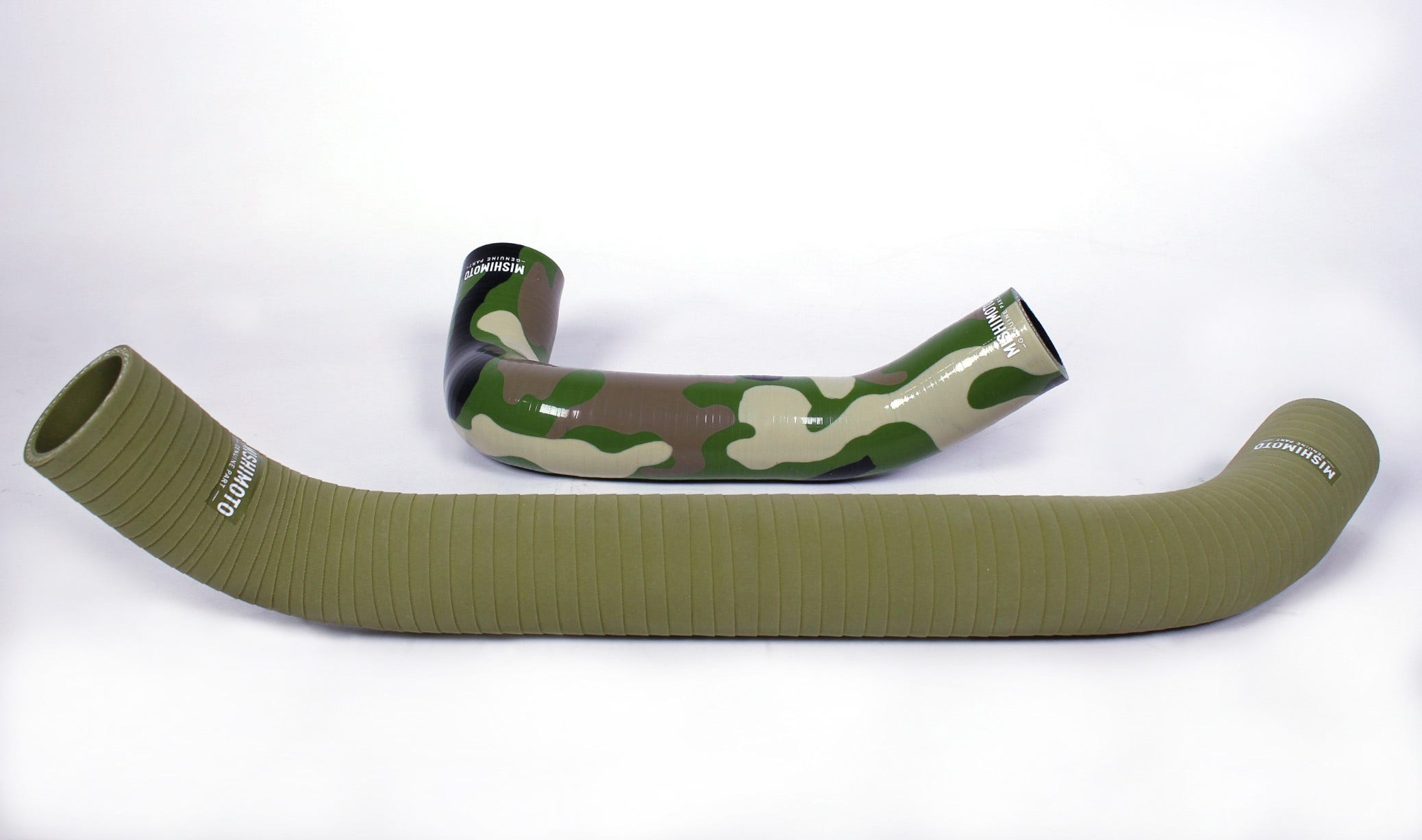
    The Mishimoto Camo and Matte Olive-Drab Jeep Wrangler radiator hose pre-sale is now live!

    1997 - 2006 Jeep Wrangler 6-Cylinder Radiator Hose Pre-sale
    Sale Price: $102.95
    MSRP: $185.00


    2007 - 2011 Jeep Wrangler 6-Cylinder Radiator Hose Pre-sale
    Sale Price: $110.95
    MSRP: $200.00

    When the designers at Chrysler were creating the Jeep Wrangler, they spent hours tweaking and finessing every line: the proportion of the headlights to the iconic seven-slot grill, the height of the bumper from the ground, and the curve of the fenders. Everything. The amount of passion that was poured into turning two rectangles and four circles into one of America's most coveted off-road vehicles cannot be measured - unless you ask an accountant. Passion built the Wrangler's body; pennies built its radiator hoses. But that's where Mishimoto steps in.

    Our new camo and olive-drab hoses let you choose both function and form
    Our new camo and olive-drab hoses give you both function and form

    For an accountant, a radiator hose is the sum of material and production costs. It's far easier

    Continue Reading »
  10. Mishimoto is Dyno-mite - Our Dynojet and Dynapack Dynos

    Mishimoto is Dyno-mite - Our Dynojet and Dynapack Dynos

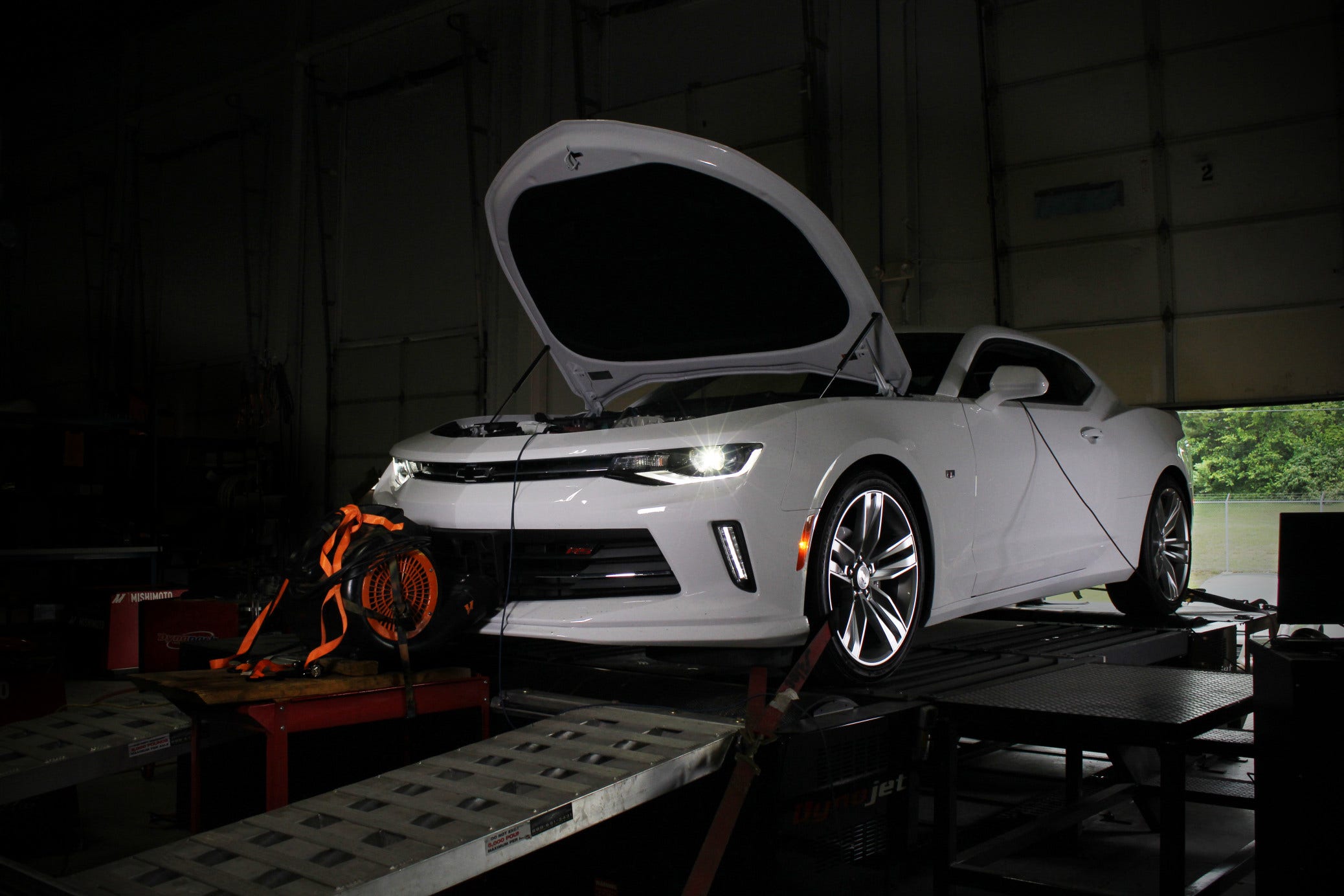
    There's nothing quite like hearing the roar of an engine mixed with the whir of rollers spinning under your wheels, all while you watch the line on the graph climb.  Running a powerful car on a dynamometer (dyno) is the epitome of instant gratification for gear-heads.  Here at Mishimoto, we use our dynos on a daily basis.  From all-wheel-drive (AWD) hatchbacks, like the Ford Focus RS, to the high-horsepower, rear-wheel-drive Chevrolet Camaro SS,  and even trucks like the Nissan Titan XD. Almost every vehicle we bring in finds itself strapped (or bolted) down to a dyno at one point or another.

    Mishimoto's Dynapack system with our Ford Focus RS lurking on the Dynojet
    Mishimoto's Dynapack system with our Ford Focus RS lurking on the Dynojet

    Whether it is baseline power testing or assessing the performance of prototype intakes or exhausts on a vehicle, Mishimoto's dynos provide our engineers with valuable, real-world data they can use to make sure our products perform to the highest standards.

    You may have noticed I said "dynos", and that's no mistake.

    Continue Reading »