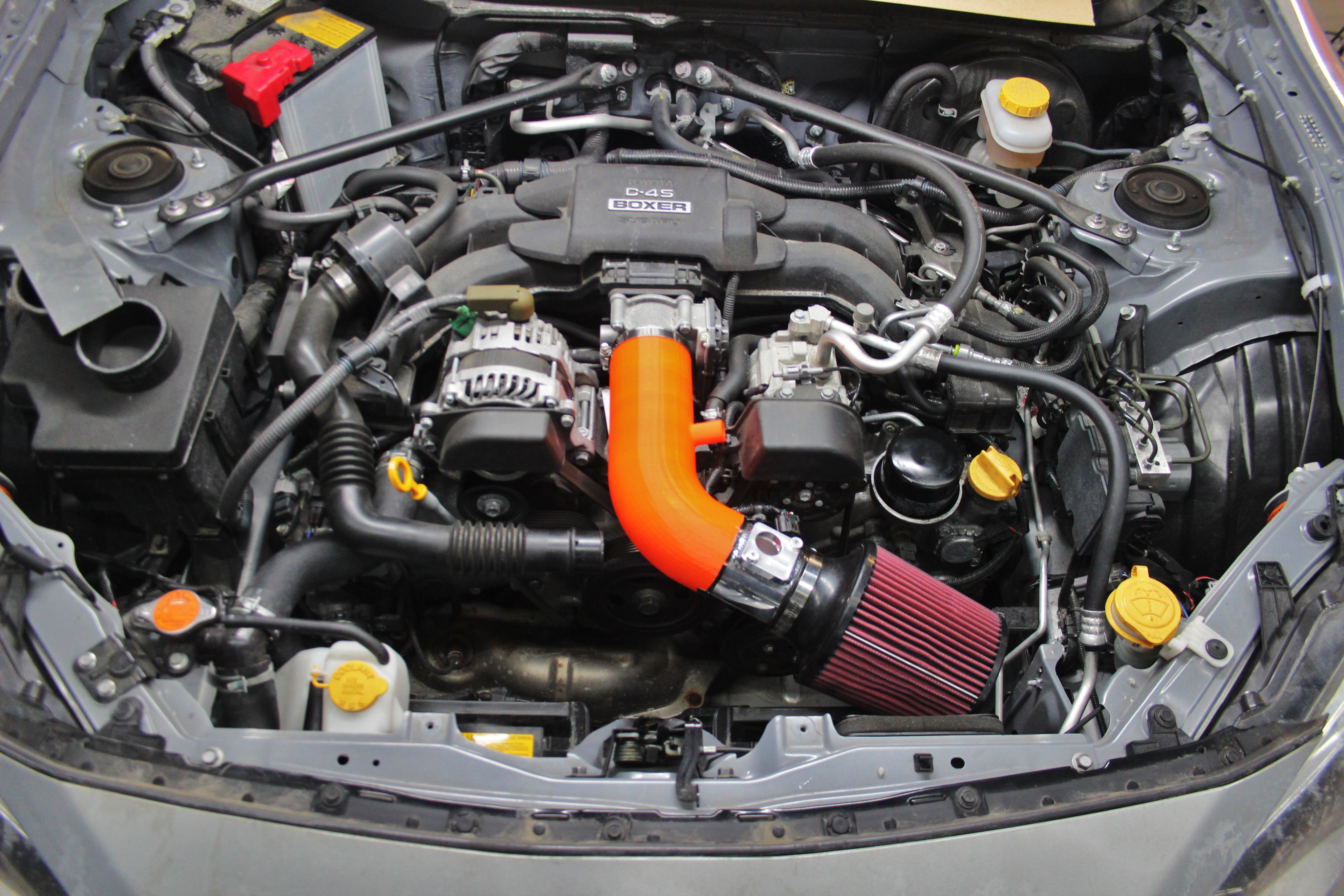
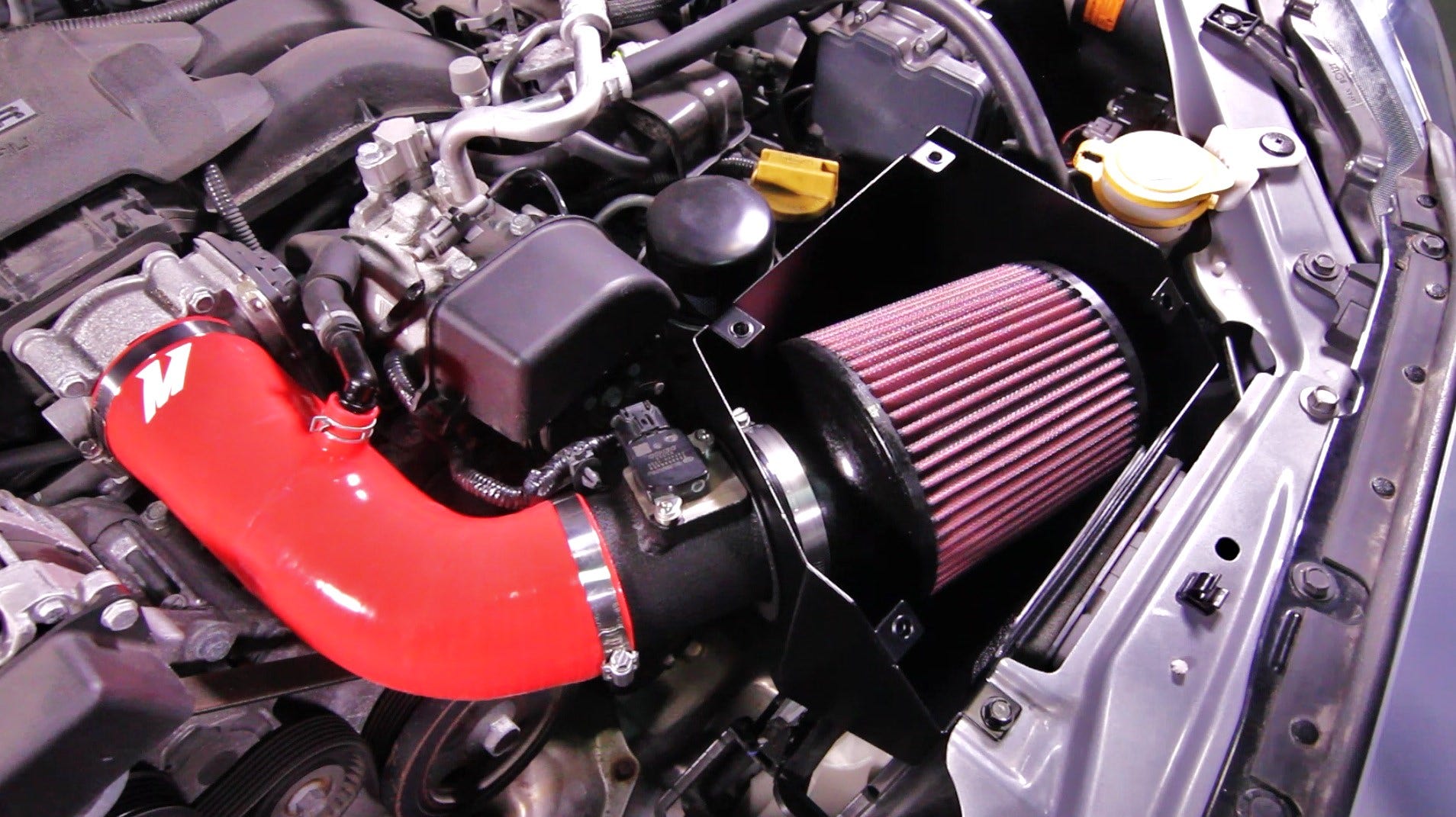
After solidifying our product design we needed to capture data to verify the design and determine if any changes were necessary. We strapped our test vehicle to the dyno and began making pulls! Check out a compilation video from the dyno testing. The audible difference in intake tone and volume is quite noticeable when comparing the stock setup with the Mishimoto prototype.
Testing Results
On to the important part, results from our tests. Intake upgrades generally
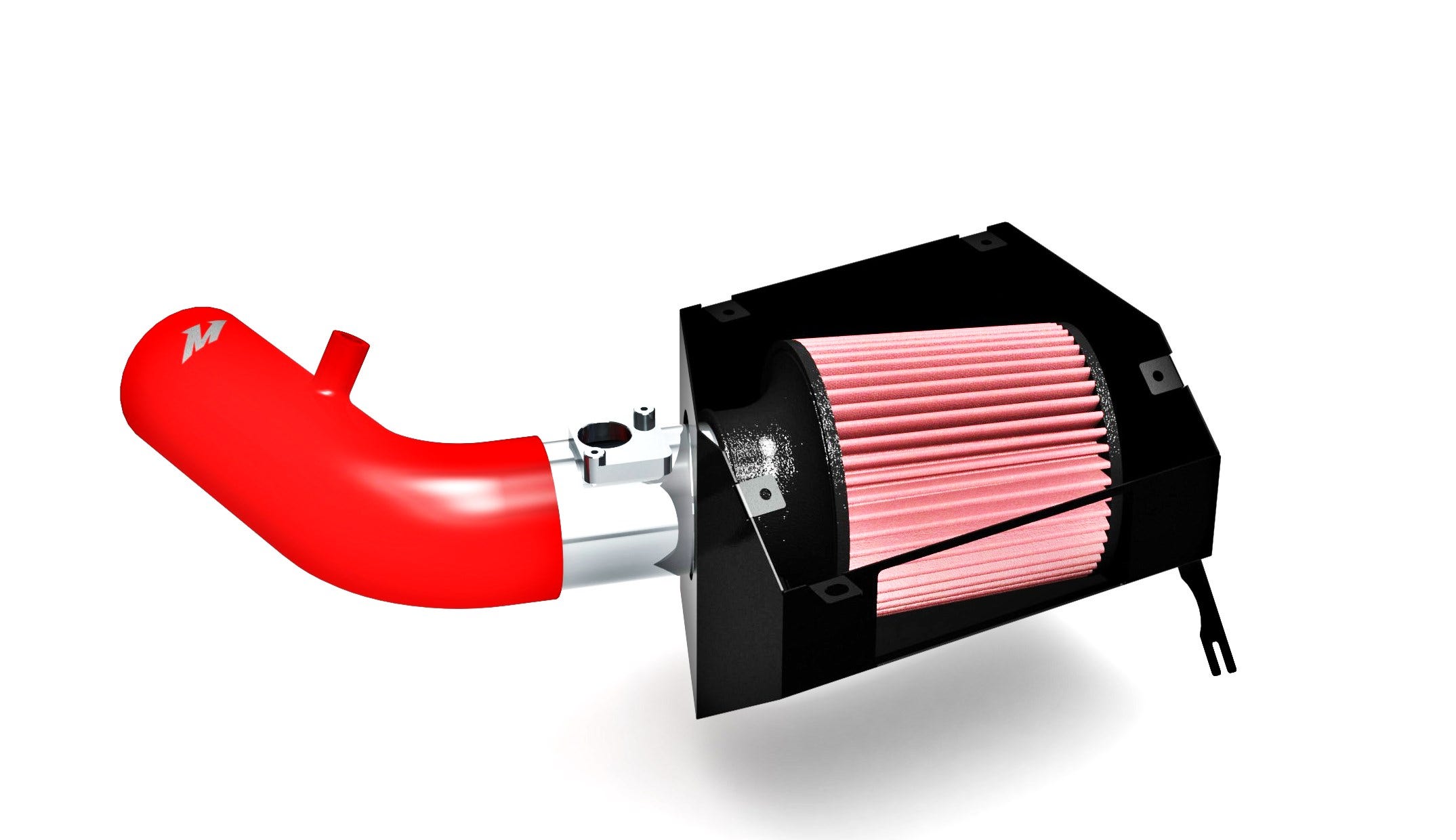
We left off last time with an explanation of our intentions with this intake system and some initial design work to create an induction route to our planned airbox. Now it was time to finish designing this intake system so that testing could be conducted.
Airbox Fabrication
We started developing our airbox with simple metal fabrication. The plan was to put our idea into a physical object and then transfer this to a 3D model. Once in Solidworks, we could solidify the final design and features and use our 3D printer to construct a final prototype for test fitting.
Fabrication begins! A simple box was drawn up and templates printed for our bends and mounting point locations.
Wait " Mishimoto already has an intake for the BRZ/FR-S. Why design a second one? As this question crosses your mind, we can provide a simple explanation.
We have had great success with our existing cold-air intake system for this chassis, and the feedback from our customer base has been fantastic.
After listening to our customers both directly and through web forums, we concluded that a second intake design was necessary for a completely different set of customers. Here are a few plans for our new design.